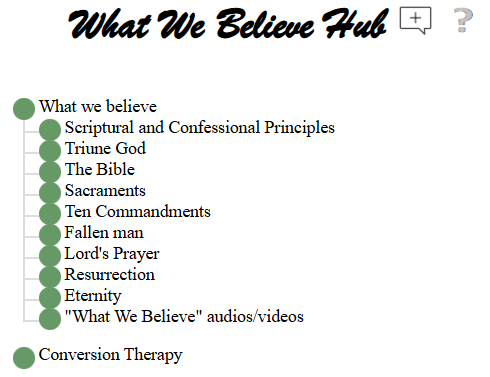
The What We Believe webpage is a doctrinal resource that organizes the faith and teaching of the Lutheran Church - Missouri Synod around its "Scriptural and Confessional Principles." It directs visitors to material on the Holy Trinity - God the Father, Son, and Holy Spirit - and functions as a gateway to explanations, documents, and videos concerning core Lutheran convictions, including the authority of Scripture, the person and saving work of Christ, and the church's confessional foundation. The site’s related Biblical Q&A material specifically recommends these What We Believe resources for understanding its Lutheran perspective, suggesting that the page is intended both as an introduction for inquirers and as a study resource for those seeking an LCMS-grounded account of Christian doctrine.
The Conversion Therapy tree presents a staged apologetic and catechetical path toward Lutheran Christianity: it directs an agnostic to consider arguments for moving from uncertainty about God to belief in a Creator; an atheist to consider reasons for moving from disbelief to theism, with related agnostic-to-theist resources also noted; a theist to examine the claims that lead from belief in a generic God to faith in Jesus Christ; and a Christian to continue into specifically Lutheran teaching. In this structure, belief in God is treated as an initial step, Christian confession of Christ as the next, and instruction in Lutheran doctrine as the final stage, creating a progressive set of resources for inquiry, evangelism, and catechesis.
The documents referenced throughout the "What we believe" tree come either from the Book of Concord or other LCMS-approved sources. The videos are predominantly videos by well-recognized LCMS pastor Bryan Wolfmueller.
Navigation of the trees is done in a straightforward fashion. Clicking a green circle expands an unexpanded node and collapses an expanded node. Clicking hyperlinked text opens a new window and displays an appropriate webpage. Various images, described throughout this help document, open webpages for various other sources that explain the Lutheran faith (top tree) or present apologetical arguments for the Lutheran faith (bottom tree).
Descriptions below were generated with the assistance of the Perplexity chatbot.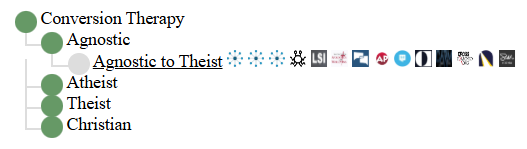
Agnostic to Theist - This text presents an apologetics-oriented framework for guiding agnostics toward theism by arguing that, although agnostics allow that God may exist, they regard knowledge of God as unknown or unknowable and should therefore examine whether a Creator better explains reality than non-theistic alternatives. It distinguishes theism or deism as belief in one or more divine creators and contends that the universe’s order, origin, fine-tuning, mathematical intelligibility, moral awareness, consciousness, reason, life, biological complexity, meaning, and religious experience point most plausibly to an intelligent Designer rather than to unguided natural processes. The resource invites users to select an AI chatbot and explore a long set of questions covering traditional philosophical arguments for God, scientific and biological arguments, the problem of evil, creation and evolution, fossils, and apparent age in the universe; it also includes objections from Alex McFarland’s 10 Answers for Atheists concerning faith and reason, alleged religious delusion, and suffering. Throughout, the text maintains that appeals to future scientific explanations are insufficient and recommends I Don’t Have Enough Faith to Be an Atheist as a further case that theism - and ultimately Christianity - offers a more reasonable worldview than unbelief.
 Brings up two new windows, one for displaying the "Unbeliever Scenarios" webpage and a second one that addresses the scenario "According to the LCMS, address the following scenario. I am an agnostic. I want to hear the arguments for God's existence." By default the Perplexity chatbot is used to address the specified scenario.
Opens the Chatbot Question Sets webpage and expands the node "Questions for/from atheists and agnostics". The Chatbot Question Sets page on Lutheran Hub is a centralized launch page for predefined question prompts that can be used with Lutheran-oriented chatbots. It replaces a larger collection of separate chatbot-interaction pages with one streamlined resource, allowing visitors to select a question set and open the Chatbots Q&A page with an appropriate default prompt already prepared; the surrounding Lutheran Hub update notes indicate this consolidation was made on August 17, 2026 to simplify access to chatbot-assisted study and inquiry.
Lutheran Hub's Apologetics Q&A webpage is an interactive tool for exploring and responding to questions that bear on the credibility and defense of Christianity from an LCMS-oriented perspective. Users can enter a question by typing or voice input, select from prepared question sets, and compare or obtain responses framed from LCMS, WELS, Lutheran, and non-LCMS perspectives; the site's help material explains that it is designed for Bible-related questions that extend beyond straightforward biblical exposition. Its indexed prompts include questions about atheism and religious pluralism, the existence of God, prayer, the exclusivity of Christ, the problem of hell, whether the Gospel depends on a young earth, the resurrection of Jesus, and practical ways to recognize and answer atheistic arguments, making the page a guided resource for apologetics study, evangelism preparation, and careful doctrinal discussion.
 Accesses the YouTube website with the query "agnostic to Christian". From an LCMS Lutheran perspective, agnosticism is the position that certain knowledge of God's existence and nature, as well as of immortality and the supernatural, has not been attained and may be unattainable; unlike atheism, it does not necessarily deny God but withholds belief or judgment about Him. The LCMS rejects agnosticism because it confesses that God is not finally unknown or inaccessible: He makes Himself known generally through His creation and moral order, but decisively and savingly through Holy Scripture and, above all, through Jesus Christ, the incarnate Son of God. Thus, the Christian response to an agnostic is neither contempt nor an attempt to force a merely philosophical conclusion, but patient proclamation of the Law, which reveals sin and humanity's need, and the Gospel, which declares that God has acted publicly in Christ's death and resurrection to forgive sinners and give eternal life to all who believe.
 The Lutheran Science Institute (LSI) website is a confessional Lutheran resource hub that brings together scientists, engineers, teachers, pastors, and laypeople to explore questions at the intersection of God's revealed Word and the created world. Its stated mission is to learn, share, and promote the glory of God as revealed in Holy Scripture and demonstrated in creation, with particular attention to origins, creation and evolution, scientific challenges to Christian belief, and classroom instruction. The site provides journal articles, videos, curriculum and activities from preschool through adult education, creation-apologetics material, and resources intended to help Christians think carefully about scientific claims while remaining faithful to Scripture; it presents itself as a forum for diverse views that remain consistent with Scripture, while noting that individual authors' views do not necessarily represent LSI as a whole.
 The Center for Apologetics and Worldviews Facebook presence represents the Evangelical Lutheran Synod's apologetics ministry, which seeks to equip Christians to recognize, articulate, and defend the truth of historic, biblical Christianity in a culture shaped by competing religious, secular, and ideological worldviews. Its materials and announcements typically direct followers to articles, lectures, conferences, and educational opportunities that present evidence for the Christian faith, critically evaluate beliefs at odds with it, and help pastors, congregations, teachers, students, families, and individual believers engage unbelievers thoughtfully. The center's stated purpose is not argument for its own sake, but to strengthen Christians in biblical truth and prepare them to confess Christ, the only Savior, with both clarity and the gentleness and respect commended in 1 Peter 3:15.
 The Got Questions Ministries YouTube presence extends GotQuestions.org's evangelical, conservative, non-denominational mission of offering biblical answers to spiritually related questions in accessible video form. Its videos, often short explanations presented by "Pastor Nelson," address a wide range of subjects - including the existence of God, the identity and work of Jesus Christ, salvation, Bible interpretation, theology, Christian living, difficult passages, apologetics, and contemporary moral or cultural questions - while directing viewers to Scripture and longer articles on the ministry's website. As a parachurch resource rather than a church body, the channel aims to support believers, answer seekers' doubts, and point people to Christ, but its interpretations reflect its own broadly evangelical perspective and should therefore be evaluated alongside Scripture and the doctrinal teaching of one's own church.
 The Apologetics Press YouTube presence, associated with the channel handle @apologeticspresspl, is the video ministry of Apologetics Press, a nonprofit organization devoted to defending what it calls New Testament Christianity. Its videos make the ministry's apologetics resources available in accessible formats, addressing subjects such as evidence for God and the Bible, the deity and resurrection of Christ, biblical reliability, difficult passages, moral questions, alleged Bible contradictions, creation and evolution, and objections from atheism or skepticism; it also offers longer instructional series and some Spanish-language content. Drawing on the work of speakers such as Dave Miller, Kyle Butt, and others, the channel is intended to equip Christians to explain and defend their faith, but its teaching reflects a conservative Restoration Movement/Churches of Christ framework - particularly in areas such as baptism, church practice, and salvation - so Lutheran viewers should assess it critically in light of Scripture and the Lutheran Confessions.
 The Answers in Genesis YouTube presence is the video outreach of a conservative evangelical apologetics ministry that aims to help Christians defend biblical authority and proclaim the Gospel of Jesus Christ, especially by promoting a young-earth creationist reading of Genesis. Its channel offers thousands of videos featuring speakers such as Ken Ham and other ministry staff on creation and evolution, the age of the earth and universe, Noah's Flood, fossil and geological evidence, dinosaurs, biblical history, atheism, cultural and moral issues, and responses to questions about suffering and the reliability of Scripture; it also directs viewers to related resources from the Ark Encounter, Creation Museum, Answers.tv, and children's programming. The channel treats Genesis as straightforward historical revelation and argues that Christian doctrine, including the Fall and the need for redemption in Christ, is inseparably connected to that history; Lutheran viewers may find useful creation-apologetics material there while also recognizing that its broadly evangelical teaching differs from LCMS doctrine in areas such as the means of grace, Baptism, the Lord’s Supper, and conversion.
 The Creation Ministries International YouTube presence, associated with CMI's worldwide ministry at Creation.com, provides video-based young-earth creationist apologetics intended to uphold the authority and historical reliability of the Bible, especially Genesis, and to connect creation directly with the Gospel. Its material includes accessible talks, interviews, debates, question-and-answer programs, Creation Magazine LIVE! episodes, podcasts, and short videos addressing evolution, natural selection, biological complexity, genetics, fossils, dinosaurs, geology, Noah's Flood, the age of the earth and universe, and objections raised by atheism or theistic evolution. CMI presents scientific evidence as consistent with special creation, a recent creation and global Flood, and argues that evolutionary naturalism cannot adequately explain life's information-rich complexity; it consequently seeks to equip Christians to answer origin-related questions and share Christ more confidently. Because it is broadly evangelical and interdenominational rather than Lutheran, LCMS viewers may profit from its creation materials while evaluating its theological claims concerning Baptism, the Lord's Supper, conversion, and the means of grace through the Scriptures and Lutheran Confessions.
 Matt Slick LIVE is the YouTube and livestream extension of Matt Slick's call-in radio program, produced by the Christian Apologetics Research Ministry (CARM), where viewers can watch live discussions and submit questions through chat or other channels. Hosted by CARM's founder and president, the program addresses biblical interpretation, Christian doctrine, apologetics, atheism, world religions, cults, church and cultural controversies, and personal questions about faith, often in an unscripted question-and-answer format that also features conversations with callers holding differing beliefs. The channel's purpose is to defend historic Christianity and provide direct, accessible responses to objections and theological questions, drawing from CARM's wider research ministry; however, its teaching reflects Slick's broadly Reformed and Calvinistic evangelical convictions, so Lutheran viewers should discern its claims - particularly on election, free will, Baptism, the Lord's Supper, and the means of grace - in light of Scripture and the Lutheran Confessions.
 The Cross Examined YouTube presence is the media arm of Frank Turek's evangelical apologetics ministry, CrossExamined.org, and uses lectures, campus question-and-answer sessions, debates, podcasts, interviews, short clips, and livestreams to argue that Christianity is intellectually credible and historically true. Its content regularly addresses arguments for God's existence, objective morality, the reliability of the Bible, the historical resurrection of Jesus, science and faith, atheism, Islam, moral controversies, and questions raised by students and skeptics; it also features Turek's I Don’t Have Enough Faith to Be an Atheist presentations and material designed to equip high-school and college students to explain and defend their beliefs. The channel's central aim is to offer evidence for Christianity, respond to difficult questions, and challenge skepticism in a public, conversational format, but its conclusions reflect broadly evangelical apologetics rather than confessional Lutheran doctrine, so LCMS viewers should use it discerningly, especially on conversion, Baptism, the Lord's Supper, election, and the means by which God gives faith.
 The Sightline Ministry YouTube presence is the video outreach of the ministry formerly known as Josh McDowell Ministry, which seeks to help people "see Jesus clearly" amid cultural confusion by offering accessible Christian apologetics, discipleship, and evangelism content. Its videos and related series address the historical reliability of the Gospels, the identity and resurrection of Jesus, faith and doubt, biblical questions, cultural and ethical issues, relationships, parenting, spiritual growth, and the concerns of teenagers and young adults; speakers such as Matthew Tingblad combine theology, philosophy, and practical pastoral engagement to answer objections and strengthen Christian conviction. The channel"s overall approach is broadly evangelical and aims to connect people with the Christian message in a contemporary, conversational way, so LCMS viewers may find useful apologetic resources while evaluating its teaching on the Sacraments, conversion, the Church, and assurance through the doctrinal lens of Scripture and the Lutheran Confessions.
 Sean McDowell's Facebook presence serves as a public extension of his work as a Christian apologist, author, speaker, and professor of apologetics at Biola University's Talbot School of Theology, aimed especially at equipping students, parents, churches, and other Christians to think clearly and communicate persuasively about their faith. It likely shares links to his articles, videos, podcasts, interviews, books, speaking engagements, and live question-and-answer sessions on topics such as the truth of Christianity, the reliability of the Bible, Jesus' resurrection, ethics, sexuality, worldview questions, doubt, and cultural controversies; its characteristic emphasis is to engage difficult questions with both intellectual seriousness and charitable dialogue. As a broadly evangelical resource, the page can be useful for apologetics and cultural engagement, though LCMS readers should evaluate its teaching on Baptism, the Lord's Supper, conversion, assurance, and the means of grace in light of Scripture and the Lutheran Confessions.
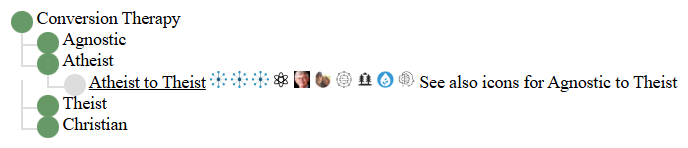
Atheist to Theist - This text presents an apologetics-based invitation for atheists to consider theism, defining atheism as denial of God's existence and characterizing it as reliance on self-determined truth and the expectation that science will eventually explain every unanswered question. It defines theism or deism as belief in a Creator and argues that the universe's order, origin, fine-tuning, moral awareness, consciousness, rationality, mathematical intelligibility, life, biological information, human complexity, meaning, and religious experience are better explained by an intelligent Designer than by atheistic naturalism. The resource directs users to select an AI chatbot and investigate a wide series of questions on classical arguments for God, DNA and cellular complexity, probability, the origin of life, evil and suffering, evolution, young-earth creation, fossil evidence, and apparent age in creation, while also offering prompts responding to common atheist objections about faith and reason, alleged religious delusion, and the problem of evil. Its overall argument is that appeals to future scientific discovery do not adequately answer these issues and that theism - and ultimately Christianity - requires less faith than unbelief, recommending I Don’t Have Enough Faith to Be an Atheist for further study.
Brings up two new windows, one for displaying the "Unbeliever Scenarios" webpage and a second one that addresses the scenario "According to the LCMS, address the following scenario. I am an agnostic. I want to hear the arguments for God's existence." By default the Perplexity chatbot is used to address the specified scenario.
Opens the Chatbot Question Sets webpage and expands the node "Questions for/from atheists and agnostics". The Chatbot Question Sets page on Lutheran Hub is a centralized launch page for predefined question prompts that can be used with Lutheran-oriented chatbots. It replaces a larger collection of separate chatbot-interaction pages with one streamlined resource, allowing visitors to select a question set and open the Chatbots Q&A page with an appropriate default prompt already prepared; the surrounding Lutheran Hub update notes indicate this consolidation was made on August 17, 2026 to simplify access to chatbot-assisted study and inquiry.
Lutheran Hub's Apologetics Q&A webpage is an interactive tool for exploring and responding to questions that bear on the credibility and defense of Christianity from an LCMS-oriented perspective. Users can enter a question by typing or voice input, select from prepared question sets, and compare or obtain responses framed from LCMS, WELS, Lutheran, and non-LCMS perspectives; the site's help material explains that it is designed for Bible-related questions that extend beyond straightforward biblical exposition. Its indexed prompts include questions about atheism and religious pluralism, the existence of God, prayer, the exclusivity of Christ, the problem of hell, whether the Gospel depends on a young earth, the resurrection of Jesus, and practical ways to recognize and answer atheistic arguments, making the page a guided resource for apologetics study, evangelism preparation, and careful doctrinal discussion.
 Accesses the YouTube website with the query "agnostic to Christian". From an LCMS Lutheran perspective, atheism is the denial of the existence of God and therefore a rejection of the God who has made Himself known in creation, in the human conscience, in Holy Scripture, and most fully in Jesus Christ. The LCMS does not regard atheism as a morally neutral conclusion reached merely by following scientific evidence, since science can investigate the created order but cannot establish that there is no Creator; rather, Scripture teaches that fallen humanity suppresses or exchanges the truth about God and is spiritually unable to come to saving faith by its own reason or strength. At the same time, Christians are called not to caricature or despise atheists, but to listen carefully to their questions and wounds, to speak truthfully and respectfully, and to proclaim both God's Law, which exposes sin and death, and the Gospel: that God has reconciled the world to Himself through the crucified and risen Christ, offering forgiveness, life, and salvation freely through faith.
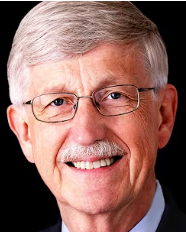 The video, posted by Daily Dose of Wisdom, features geneticist and former Human Genome Project leader Francis Collins explaining how his movement from atheism to Christian faith emerged through both intellectual reflection and an awareness of personal spiritual need. Collins argues that the universe's existence, the remarkable effectiveness of mathematics, the Big Bang's implication of a beginning, and the apparent fine-tuning of physical constants make a transcendent Creator more plausible to him than atheism or an unobservable multiverse; he then turns to C. S. Lewis's moral-law argument, suggesting that human awareness of objective right and wrong - especially radical altruism - points beyond evolutionary self-interest to a good and personal God. Finally, Collins says that recognizing both God's holiness and his own moral failure led him beyond generic theism to Jesus Christ, whose death and resurrection he presents as God's answer to sin, evil, and humanity's separation from God; the host closes by inviting viewers to consider Christ's forgiveness and saving work.
 In this Capturing Christianity interview, retired biochemist Dr. Sy Garte recounts his gradual journey from a strongly atheistic, materialist upbringing to Christian faith, arguing that his scientific work did not support the view that all reality can be explained by matter alone. Garte says that quantum physics, the fine-tuning of the universe, consciousness and morality, and especially the unresolved problem of abiogenesis - the origin of the first self-replicating living cell - undermined his confidence that unguided processes were a sufficient explanation for life; he contends that biological evolution does not itself explain how life began and proposes that science may need to take purpose or teleology more seriously. His movement from agnosticism to Christianity also involved reading Matthew and Acts, being struck by a sermon on love at a Franciscan church, and interpreting several personal experiences and dreams as the Holy Spirit's leading; he ultimately came to confess Christ as real, crucified, risen, and the Creator and Savior. The interview's chief pastoral message is that Christians need not choose between science and faith, because Garte believes scientific inquiry rightly understood is compatible with - and increasingly suggestive of - the Christian doctrine of creation.
 The webpage hosts a 17-minute episode of The Counsel of Trent in which Catholic apologist Trent Horn argues that the fine-tuning argument is the most compelling contemporary argument for God's existence, noting that even several prominent atheist commentators regard it as a serious or top-tier challenge to a purposeless universe. Horn explains that the argument does not claim the universe is optimally designed for life, but that physical constants fall within an exceptionally narrow life-permitting range that, he contends, is far less surprising if a Creator intended embodied, conscious life than if the universe resulted from chance alone; he compares this reasoning to inferring design from an extraordinarily improbable sequence of royal flushes. The video considers objections based on the multiverse and a philosophical proposal that different "psychophysical laws" might permit conscious electrons or other minds in universes unlike ours, then argues that these possibilities neither remove the rarity of our own life-permitting universe nor supply a more plausible explanation than purposeful design. Horn concludes that a world containing biological creatures capable of freely chosen, sacrificial love offers a more meaningful fit with divine intention than hypothetical worlds filled with minimally conscious particles.
 In this Apologetics Roadshow video, David Wood argues that Richard Dawkins, during a discussion with Piers Morgan about the Big Bang and the limits of human intuition, inadvertently supplies support for the "evolutionary argument against naturalism." Wood focuses on Dawkins's claim that human cognitive abilities evolved chiefly to help ancestral humans survive and reproduce - not to grasp ultimate questions in physics or cosmology - and contends that this creates a self-defeating problem for atheistic naturalism: if beliefs are merely the effects of nonrational physical processes shaped for survival, rather than for truth, then people have no adequate basis for trusting the reasoning by which they embrace naturalism itself. Drawing on remarks attributed to Charles Darwin and philosopher Patricia Churchland, Wood maintains that false beliefs can sometimes be evolutionarily useful, so survival value does not guarantee truth-tracking rationality; he concludes that humans' confidence in reason is better explained by their being made in God's image than by unguided evolution. The video is therefore a forceful apologetic presentation of a contested philosophical argument, rather than a neutral assessment of atheism, evolution, or cognitive science.
 The Living Waters YouTube presence is the large-scale video ministry of Ray Comfort's evangelism organization, designed to inspire and equip Christians to fulfill the Great Commission through gospel-centered witnessing. Hosted primarily by Ray Comfort alongside Emeal "E.Z." Zwayne, Mark Spence, Oscar Navarro, and guests, the channel offers thousands of videos - street evangelism encounters, apologetics discussions, interviews, documentaries, sermons, training demonstrations, podcasts, short clips, and responses to cultural questions - addressing atheism, other religions, abortion, sexuality, suffering, doubt, and how to explain the Christian faith. Its distinctive method commonly uses God's Law, especially the Ten Commandments, to expose sin and human need before proclaiming forgiveness through Christ, a Law-and-Gospel sequence that can be helpful for evangelism; nevertheless, its broadly evangelical theology should be assessed from an LCMS perspective, particularly regarding conversion, assurance, Baptism, the Lord's Supper, and the means of grace.
 The video presents Chris Langan's Cognitive-Theoretic Model of the Universe (CTMU) as a philosophical argument that God is a logical necessity rather than merely an object of religious faith. Framed by the channel Soul's Opinion as the view of a man reputed to have an exceptionally high IQ, it argues that reality must possess an underlying identity in order to exist at all, linking this claim to God's self-description in Exodus as "I AM"; it then reasons that the fundamental source or principle of reality must have qualities traditionally attributed to God, including omniscience, omnipotence, omnipresence, and consciousness. Using a simulation or information-processing analogy, Langan suggests that reality's changing yet coherent states require an ultimate "processor" that sustains them, and he extends this to claim that human beings are conscious reflections or "mappings" of God. The video thus offers a brief, highly compressed metaphysical case for a God-like ground of reality, though its title overstates what philosophy can establish: the argument is a disputed interpretation of Langan's CTMU and does not by itself prove the personal, Triune God or the saving claims of Christianity.
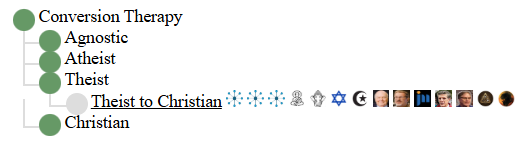
Theist to Christian - Displays a webpage that presents a Christian apologetics and catechesis resource intended to guide a person from general belief in a Creator to faith in the Triune God revealed in Jesus Christ. It distinguishes theism - belief that one or more gods exist and act in the world - from Christianity, which confesses the Father, Son, and Holy Spirit; the incarnation, sinless life, atoning death, bodily resurrection, and saving lordship of Jesus; and the forgiveness and eternal life given to believers through Christ's righteousness rather than their own merit. The page argues that this movement involves both historical and rational consideration of the biblical claims, especially Christ's death and resurrection, and the Holy Spirit's creation of faith through the Word of God and the Sacraments. It supplies chatbot-guided questions on historical evidence for Jesus, miracles, the resurrection, Genesis, creation, the Flood, suffering, and common objections to Christianity, then directs readers to further apologetic material. Finally, it emphasizes repentance, forgiveness, reading Scripture - particularly the Gospel of John - prayer, pastoral care, participation in a Bible-believing congregation, and study of the Apostles', Nicene, and Athanasian Creeds as summaries of the Christian faith.
Brings up two new windows, one for displaying the "Unbeliever Scenarios" webpage and a second one that addresses the scenario "According to the LCMS, address the following scenario. I am a theist/polytheist/deist. I want to understand how Christianity is different than other religions." By default the Perplexity chatbot is used to address the specified scenario.
Opens the Chatbot Question Sets webpage and expands the node "Questions for people of other religions". The Chatbot Question Sets page on Lutheran Hub is a centralized launch page for predefined question prompts that can be used with Lutheran-oriented chatbots. It replaces a larger collection of separate chatbot-interaction pages with one streamlined resource, allowing visitors to select a question set and open the Chatbots Q&A page with an appropriate default prompt already prepared; the surrounding Lutheran Hub update notes indicate this consolidation was made on August 17, 2026 to simplify access to chatbot-assisted study and inquiry.
Lutheran Hub's Biblical Q&A webpage is an interactive question-and-answer resource designed to help users explore biblical, doctrinal, ethical, apologetic, and pastoral questions from an LCMS Lutheran perspective. It lets a visitor ask a question - using text or voice input - and select from organized question sets, including prompts for atheists, Christians, and untrained or beginning readers, as well as topical questions on subjects such as women's ordination, the Christian's relation to God's Law, suffering, Baptism, heaven and resurrection, death, the Lord's Supper, creation and others. Rather than presenting a fixed sequence of articles, the page functions as a guided interface for engaging particular questions and receiving answers framed "According to the LCMS," making it useful for personal study, catechesis, or discussion preparation.
 Accesses the YouTube website with the query "Buddhist to Christian". From an LCMS Lutheran perspective, Buddhism is a diverse religious and philosophical tradition associated with Siddhartha Gautama, the Buddha, that seeks awakening or enlightenment in response to the pervasive reality of suffering; its common teachings include the Four Noble Truths, the Eightfold Path, karma, rebirth, moral discipline, meditation, and the pursuit of nirvana, understood as release from suffering and the cycle of rebirth. Because Buddhist traditions commonly do not confess a personal, creator God and generally interpret humanity's deepest problem as ignorance, craving, and attachment rather than sin against the holy God, the LCMS regards Buddhism as fundamentally incompatible with biblical Christianity. Lutheran teaching instead confesses that people are created by the Triune God, fallen into sin, redeemed not through self-directed enlightenment or moral and meditative progress but through the incarnate Son of God, Jesus Christ, and raised bodily to eternal life through His grace; Christians therefore are called to engage Buddhist neighbors with respect and compassion while bearing humble witness to forgiveness, reconciliation with God, and resurrection in Christ alone.
 Accesses the YouTube website with the query "Hindu to Christian". From an LCMS Lutheran perspective, Hinduism is a very diverse family of religious traditions - primarily associated with India and Nepal - rather than a single, centrally governed creed, and it commonly includes reverence for many deities or manifestations of the divine, authoritative sacred writings such as the Vedas and Upanishads, beliefs in karma and reincarnation, and varied paths toward moksha, or liberation from the cycle of rebirth, through devotion, knowledge, meditation, moral action, or other spiritual disciplines. The LCMS recognizes Hinduism's great internal diversity but judges its core religious claims to be incompatible with the biblical confession of one personal, Triune Creator; the unique incarnation, atoning death, and bodily resurrection of Jesus Christ; the reality of sin as rebellion against God; and salvation as God's free gift received through faith in Christ rather than as liberation achieved through spiritual progress or accumulated works. Accordingly, the LCMS calls Christians to treat Hindu neighbors with genuine respect and love while bearing clear, humble witness that forgiveness, resurrection, and eternal life are found in Christ alone.
 Accesses the YouTube website with the query "Jew to Christian". From an LCMS Lutheran perspective, Judaism is the religious tradition of the Jewish people, rooted in the Old Testament Scriptures, the worship of the one God of Abraham, Isaac, and Jacob, and a life ordered by the Torah and later rabbinic interpretation; it shares with Christianity the biblical history, moral law, patriarchs, prophets, and divine promises given to Israel. The LCMS distinguishes the Christ-centered faith of the Old Testament Israelites - whose promises and sacrificial worship pointed forward to the Messiah - from post-biblical Judaism, because Judaism does not confess Jesus of Nazareth as the promised Messiah, the incarnate Son of God, or the Savior who fulfills the Law and Prophets. Therefore, the LCMS believes that the forgiveness of sins and salvation promised in the Old Testament find their fulfillment only in Christ and are received through faith in Him, while also insisting that Christians must reject antisemitism, discrimination, coercion, and hostility toward Jewish people; the Gospel is to be proclaimed to Jews with the same love, respect, prayer, and non-coercive witness owed to every neighbor.
 Accesses the YouTube website with the query "Muslim to Christian". From an LCMS Lutheran perspective, Islam is a monotheistic religion founded on the teachings of Muhammad and centered on submission to the one God, reverence for the Qur'an as God's final revelation, regular prayer, fasting during Ramadan, almsgiving, pilgrimage to Mecca, and a life of obedience in anticipation of God's final judgment; Muslims honor Abraham and recognize Jesus as born of the Virgin Mary, a miracle-working prophet, and the Word of God in a qualified sense, but they deny the Holy Trinity, reject Jesus' full deity and His saving death and resurrection, and do not confess Him as the incarnate Son of God and Savior of the world. Therefore, while the LCMS encourages Christians to treat Muslims with genuine respect, love, and peaceful neighborliness, it maintains that Islam and Christianity proclaim fundamentally different understandings of God, Christ, revelation, and salvation, and that forgiveness of sins and salvation are received only through faith in the crucified and risen Jesus Christ - not through human works or religious obedience.
 Naga Seminarian is a YouTube-focused apologetics presence that appears to address theology, comparative religion, and biblical interpretation, with particular attention to debates involving Christianity, Islam, and challenges to the historical reliability of biblical texts. Its content is presented in a polemical and argumentative style, seeking to defend Christian claims by criticizing opposing religious or skeptical positions; however, it should be approached with discernment, since at least one external doctrinal-review site characterizes the channel as containing significant theological misinformation, especially in its treatment of Islam and historical-critical questions about Scripture.
John C. Lennox is a Northern Irish mathematician, Christian apologist, and Emeritus Professor of Mathematics at the University of Oxford whose public work brings mathematics, philosophy of science, ethics, and Christian faith into conversation. Educated at Cambridge and Oxford and the author of more than seventy mathematical papers, he is widely known beyond mathematics for arguing that scientific investigation does not eliminate rational belief in God, for addressing questions about atheism, human origins, suffering, artificial intelligence, and biblical faith, and for participating in high-profile debates with figures such as Richard Dawkins, Christopher Hitchens, Peter Singer, and Peter Atkins. His popular works - including God's Undertaker, God and Stephen Hawking, Gunning for God, Can Science Explain Everything?, and 2084: Artificial Intelligence and the Future of Humanity - generally contend that the intelligibility and rational order of the universe are compatible with, and point beyond themselves toward, Christian theism; he also serves as president of the Oxford Centre for Christian Apologetics.
 Accesses the YouTube website with the query "Lee Strobel". Lee Strobel is an American Christian apologist, author, pastor, and former investigative journalist best known for The Case for Christ, a popular-level defense of the historical credibility of Christianity and the resurrection of Jesus. After working as an award-winning legal editor for the Chicago Tribune and identifying as an atheist, Strobel began investigating Christian claims after his wife's conversion; he says that a nearly two-year inquiry led him to become a Christian in 1981. Drawing on his journalism and legal training, he has written more than forty books and curricula - among them The Case for Faith, The Case for a Creator, The Case for Grace, The Case for Miracles, and The Case for Heaven - using interviews with scholars and a "case-making" format to address skeptical questions about God, Jesus, the Bible, suffering, science, miracles, and eternal life. His work has made him one of the most widely recognized evangelical apologists, and his conversion story was dramatized in the 2017 film The Case for Christ.
 Accesses the YouTube website with the query "Josh McDowell". Josh McDowell is an American evangelical Christian apologist, evangelist, author, and speaker best known for presenting arguments for the truth of Christianity to skeptical audiences, especially students and young people. Formerly an agnostic, McDowell has described investigating Christianity with the intention of disproving it before becoming convinced of its claims and devoting his life to Christian ministry through Cru (formerly Campus Crusade for Christ) and the Josh McDowell Ministry, now known as Sightline; since the early 1960s, he has delivered thousands of talks internationally and written or coauthored more than 150 books. His best-known works, Evidence That Demands a Verdict - subsequently updated with his son Sean McDowell - and More Than a Carpenter defend the historical reliability of the Bible, the deity and resurrection of Jesus, and the reasonableness of Christian faith, while other writing and ministry have addressed discipleship, relationships, sexual integrity, abuse recovery, and equipping families and churches to communicate the Christian faith.
 Accesses the YouTube website with the query "Cliffe Knechtle". Cliffe Knechtle is an American Christian pastor, evangelist, author, and apologist best known as the founder and host of Give Me an Answer, a ministry built around public conversations with skeptics and students about Christianity, God, truth, morality, suffering, science, and the reliability of the Bible. A graduate of Davidson College and Gordon-Conwell Theological Seminary, he began campus evangelism after entering ministry in 1979 and has conducted open-air question-and-answer sessions at universities including Harvard, MIT, UCLA, Stanford, Berkeley, and the University of Texas; these exchanges, often lasting several hours, have become widely viewed through YouTube, TikTok, and Instagram. Knechtle also serves as senior pastor of Grace Community Church in New Canaan, Connecticut, and frequently works alongside his son Stuart, emphasizing a conversational, reason-giving approach to Christian witness that invites difficult objections rather than avoiding them.
 Accesses the YouTube website with the query "Frank Turek". Frank Turek is an American evangelical Christian apologist, author, public speaker, and founder and president of CrossExamined.org, an interdenominational ministry established in 2006 to offer evidence for Christianity and respond to skeptical objections. He is especially known for using philosophical and historical arguments concerning God's existence, objective morality, the reliability of the New Testament, and the historical case for Jesus' resurrection, presenting them through campus lectures, debates, podcasts, online videos, church seminars, and apologetics-training programs. Turek holds a Doctor of Ministry in Apologetics from Southern Evangelical Seminary and a master's degree from George Washington University; his major books include the bestselling I Don’t Have Enough Faith to Be an Atheist, coauthored with Norman Geisler, as well as Stealing from God, Correct, Not Politically Correct, Legislating Morality, and Hollywood Heroes. His ministry's central aim is to equip Christians to articulate and defend their faith while engaging objections from atheists and other skeptics in public settings.
 Towards Jesus is a Christian YouTube ministry and content channel that focuses primarily on defending and proclaiming the deity of Jesus Christ, the Trinity, and the reliability of the Bible, often through recorded debates, livestreams, clips, and discussions involving Muslim speakers and Islamic objections to Christianity. Much of its content features or promotes the work of apologists such as Sam Shamoun, engaging questions about the Qur'an, Muhammad, the biblical testimony to Christ, and the differences between Christian and Islamic teaching; its stated purpose is to spread the message of Jesus through online media and supporter-funded outreach. The channel's approach is strongly polemical and debate-centered, so viewers may find useful material for learning common apologetic arguments, but should also test claims, quotations, and interpretive conclusions carefully against Scripture and reliable primary sources.
Sam Shamoun is a Christian apologist, writer, lecturer, and online debater known chiefly for his extensive engagement with Islam and for defending historic Christian doctrines such as the Trinity, the full deity of Jesus Christ, the crucifixion and resurrection, and the reliability of the Bible. Of Assyrian Christian background and associated for many years with the Answering Islam website, he has produced a large body of articles and video material that responds to Muslim objections to Christianity while critically examining the Qur'an, Hadith, Islamic theology, and Muslim arguments about Jesus and Scripture; his published work includes topical treatments of Christology, the New Testament, Qur'anic issues, and common Christian-Muslim debate questions. Shamoun's rapid recall, intensive use of biblical and Islamic texts, and forceful debating manner have made him influential in online Christian apologetics, though his confrontational style also makes his work controversial; Christians seeking to learn from it should therefore retain a commitment to accurate sourcing, charitable speech, and the apostolic instruction to give a defense with gentleness and respect.
 Apologetics - Jude 1:3 is a Christian YouTube channel devoted to defending and explaining the faith, taking its name from Jude's call to "contend for the faith that was once for all delivered to the saints." Its content appears to collect and share videos on biblical reliability, the person and deity of Jesus Christ, the resurrection, arguments for God's existence, and responses to objections raised by atheism, Islam, and other religious or skeptical viewpoints; the channel also features material from well-known apologists, including videos connected with Nabeel Qureshi. In keeping with its apologetic purpose, the channel aims to equip Christians with reasons for their beliefs and invite skeptics to consider Christianity's truth claims, while its inclusion in broader Christian-apologetics channel collections indicates that it functions largely as a curated resource for teaching, debate, and evangelistic engagement.
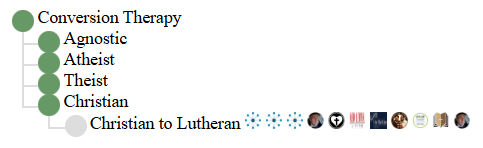
Brings up two new windows, one for displaying the "Unbeliever Scenarios" webpage and a second one that addresses the scenario "According to the LCMS, address the following scenario. I am a Christian of another denomination. I want to learn about Lutheranism." By default the Perplexity chatbot is used to address the specified scenario.
Opens the Chatbot Question Sets webpage and expands the node "Questions/topics for Christians". The Chatbot Question Sets page on Lutheran Hub is a centralized launch page for predefined question prompts that can be used with Lutheran-oriented chatbots. It replaces a larger collection of separate chatbot-interaction pages with one streamlined resource, allowing visitors to select a question set and open the Chatbots Q&A page with an appropriate default prompt already prepared; the surrounding Lutheran Hub update notes indicate this consolidation was made on August 17, 2026 to simplify access to chatbot-assisted study and inquiry.
Displays the Lutheran Differences Hub which includes individual selections for (1) the Chatbots Question Sets webpage used to view question sets that differentiate the Lutheran Church - Missouri Synod (LCMS) from other Lutheran denominations and other Christian denominations, (2) a Differences Scenarios webpage that uses chatbots to elaborate on differences between the LCMS and other Christian denominations on a variety of topics, (3) the Chatbots Question Sets webpage used to view question sets that differentiate the LCMS faith from other non-Christian faiths and (4) a webpage that uses chatbots to elaborate on differences between the LCMS and other non-Christian faiths.
 Wolfmueller.co is the personal theological teaching and resource website of the Rev. Bryan Wolfmueller, an LCMS pastor serving St. Paul Lutheran Church and Jesus Lutheran Church of the Deaf in Austin, Texas. The site gathers his sermons, articles, videos, podcasts, books, downloadable studies, devotionals, and courses, all intended to help readers "recover the joy of theology" by encountering the clear comfort of Christ and His Gospel. From a Lutheran perspective, its materials commonly focus on the Scriptures, the person and work of Jesus Christ, the distinction between Law and Gospel, the Lutheran Confessions, the Divine Service, Christian vocation, apologetics, and pastoral care. Although wolfmueller.co is not an official LCMS website or agency, it functions as a confessional Lutheran teaching ministry connected to the work of an LCMS pastor and is meant to serve the wider Church through accessible, Christ-centered theological instruction and resources.
 Dr. Jordan B. Cooper is an ordained Lutheran pastor, systematic theologian, author, educator, and public teacher known especially for founding and directing the theological education ministry Just & Sinner. He serves as Executive Director of Just & Sinner, Fellow of Systematic Theology at the Weidner Institute, Chair of Lutheran Dogmatics at the American Lutheran Theological Seminary, and Campus Minister in Residence with Lutheran Student Fellowship at Cornell University. His work aims to retrieve and explain classical Lutheran theology for contemporary Christians through books, courses, lectures, articles, videos, and the long-running Just & Sinner Podcast, which he has hosted since 2012. Cooper holds a Ph.D. from the South African Theological Seminary; his doctoral dissertation defended the Lutheran scholastic theological method and critiqued radical Lutheranism. His published work addresses systematic theology, justification, apologetics, liturgical worship, philosophy, and historical Protestant scholasticism, including the ongoing A Contemporary Protestant Scholastic Theology series.
 Zach Zehnder is a fourth-generation Lutheran pastor, author, speaker, and discipleship-resource developer who serves at King of Kings Church in Omaha, Nebraska, where he preaches regularly and helps guide multisite ministry strategy. He is the founder of Red Letter Living and the author of the bestselling Red Letter Challenge, a 40-day discipleship program designed to encourage Christians to put Jesus' teaching into practice through themes such as being, forgiving, serving, giving, and going. Zehnder holds a Master of Divinity from Concordia Seminary in St. Louis and has written or co-written more than ten books intended to help congregations, small groups, families, and individuals grow as active followers of Christ. In addition to his pastoral and publishing work, he is known for setting the Guinness World Record for the longest speech - 53 hours and 18 minutes - in 2014, an effort that raised more than $100,000 for a nonprofit ministry.
 Rev. Bryan Stecker is an LCMS pastor, theological educator, and media creator who serves as associate pastor at Trinity Lutheran Church and School in Waconia, Minnesota. A graduate of Concordia Theological Seminary, Fort Wayne, where he earned his Master of Divinity, Stecker previously served Grace Lutheran Church in Nashua, New Hampshire. He is best known as the host and creator of On The Line, a long-form Lutheran podcast that brings pastors, scholars, authors, and other guests into sustained conversations on theology, Scripture, philosophy, culture, church history, and contemporary issues. He also founded the Lutheran Institute of Theology, which provides professionally produced, self-paced courses intended to make substantial confessional Lutheran theological education more accessible to laypeople and church workers. Together, his pastoral ministry and digital work seek to equip the Church with engaging, serious, and distinctly Lutheran teaching for life in the modern world.
 FLAME's Extra Nos Academy is a media-based theological education ministry that seeks to communicate historic Lutheran Christianity through podcasts, music, creative arts, and cultural engagement. Its name comes from the Latin extra nos, meaning "outside of us," and points to the central Lutheran confession that salvation and assurance rest not on inward feelings, personal striving, or human achievement, but on Christ's completed work delivered objectively through God's Word and Sacraments. Founded by Marcus "FLAME" Gray - a Grammy-nominated Christian hip-hop artist who became confessionally Lutheran after theological study at Concordia Seminary in St. Louis - the academy addresses Scripture, doctrine, the Book of Concord, culture, and Christian life in an accessible format. Through the Extra Nos Academy podcast and related creative projects, FLAME aims to equip listeners to understand ancient Christianity as preserved in Lutheran thought and to rest in God's grace given "outside ourselves."
 KFUO Radio's website is the online home of the official broadcast ministry and radio voice of The Lutheran Church - Missouri Synod, offering Christ-centered programming intended to "fill [the] world with the Word of Christ for you." Rooted in the LCMS's confession of Jesus Christ crucified and risen for the salvation of sinners, the site provides live and on-demand access to KFUO's broadcasts, podcasts, worship services, daily chapel, prayer offices, Bible studies, theological teaching, sacred music, and practical programs for Christian life and vocation. Listeners can hear programming locally on AM 850 and affiliated FM signals in the St. Louis area, while the website and app extend the station's resources worldwide through continuous online streaming. As a listener-supported LCMS ministry, KFUO seeks to serve congregations and individual Christians by proclaiming the Gospel clearly, strengthening faith through Scripture and the Lutheran Confessions, and making Lutheran worship, teaching, and music widely accessible.
 Steadfast Lutherans is an independent, confessional Lutheran nonprofit and media-resource website that seeks to strengthen pastors and laity in the historic Lutheran faith through articles, podcasts, devotions, printable congregational materials, and catechetical resources. Emerging from the mid-2000s "Brothers of John the Steadfast" movement, it was formed to rally lay support for sound Lutheran teaching and for confessional media such as Issues, Etc.; it later broadened into resources for the wider church, including women's work through the "Sisters of Katie Luther." From an LCMS perspective, its stated emphasis on Scripture, the Lutheran Confessions, Christian catechesis, and the defense of the apostolic faith places it broadly within the confessional Lutheran orbit; however, it is not an official agency, publication, or governing voice of The Lutheran Church - Missouri Synod, whose doctrine is formally summarized in its own statement of beliefs and confessional subscription.
In Has American Christianity Failed?, Lutheran pastor Bryan Wolfmueller argues that much of American Christianity has become inwardly focused, centering faith on an individual's decision, spiritual experience, sincerity, moral effort, or level of commitment rather than on Christ's completed saving work. He critiques recurring emphases such as revivalism, pietism, mysticism, and decision-centered theology because, in his view, they blur the distinction between Law and Gospel, soften the seriousness of sin, and leave consciences caught between pride when they think they are succeeding and despair when they recognize they are not. Wolfmueller's proposed remedy is a return to the objective Gospel: Christ crucified and risen for sinners, with forgiveness and assurance delivered outside oneself through God's Word and Sacraments. Thus, the book's central concern is not that every American Christian or congregation has failed in the same way, but that American religious habits often "preach the Christian instead of Christ," obscuring the comfort, freedom, and certainty found in Christ alone.